Descriptive Astronomy 101
Asteroids and Meteoroids
Rocks in Space
Asteroids - large rocky or metallic bodies generally greater than a few meters in diameter
Meteoroid - small rocky or metallic bodies generally less than a few meters diameter to microscopic in size
Meteor - a meteoroid that is passing through a planetary atmosphere.
Meteorite - a meteoroid that has survived passage through the atmosphere and impacted on the surface. (Falls and Finds)
Asteroids
More than 150,000 asteroids have been identified
Largest: Ceres, 1000 km diameter
If all asteroids were gathered together, they would form a body only 2000 km in diameter.
Asteroids and meteoroids are the left over debris from the accretion process which formed the planets.
Asteroids originally formed throughout the solar nebula with a uniform distribution.
Asteroid Belt
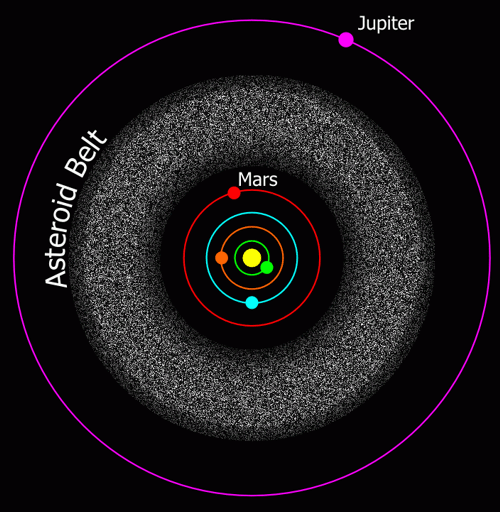
Within 100 million years almost all asteroids were cleaned out of the inner Solar System.
Most of the remaining asteroids are now found in a zone between Mars and Jupiter
Trojan Asteroids:
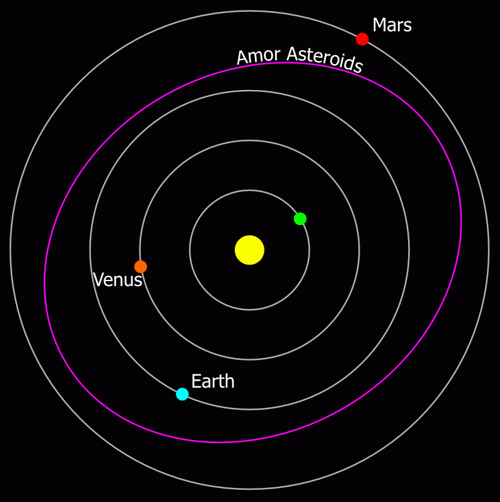
Amor Asteroids:
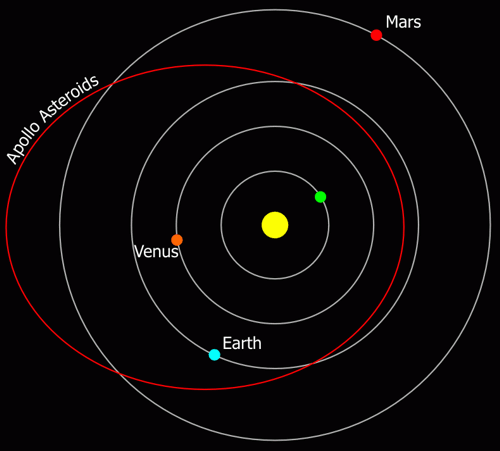
Apollo Asteroids:
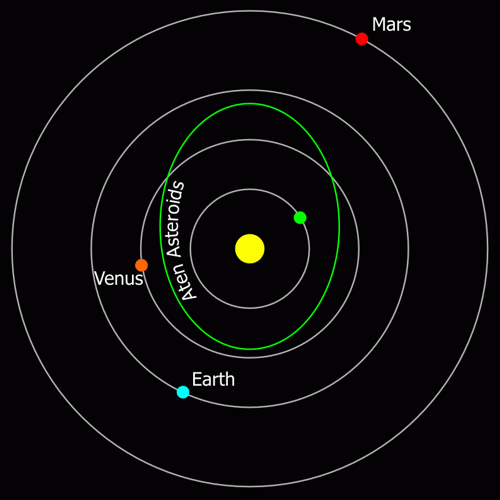
Aten Asteroids:

Types of Asteroids
Classification of asteroids is primarily based on the reflectance spectrum and albedo.
14 different classes have been proposed: A, B, C, D, E, F, G, M, P, Q, R, S, T, V
C-class asteroid: very dark and non-reflective asteroid, gray in color, with a composition believed to be similar to that of carbonaceous chondrites
M-class asteroid: relatively bright and reflective asteroid, made mainly of metallic iron and nickel
S-class asteroid: moderately bright, slightly reddish type of asteroid believed to be composed largely of silicate minerals
Primitive Asteroids
Unaltered remnants of the accretion process.
They are large planetesimals that accreted in the solar nebula - unchanged since formation
Processed Asteroids
Compositions that are similar to the cores, mantles, or crusts of the terrestrial worlds.
Fragments of larger asteroids that underwent differentiation - planetary processes
The interior melted so that metals sank to the center and rocks rose to the surface.
Meteoroids are produced by impact collisions.
Meteorites
3 Classes
Stony
Iron
Stony-Iron
Stony Meteorites
Chondrites
Contain chondrules
3 Types:
Ordinary Chondrites
Enstatite Chondrites - enstatite-rich
Carbonaceous Chondrites - contain carbon and organic molecules (including amino acids)
- most primitive meteorites
- form at greater than 3 AU
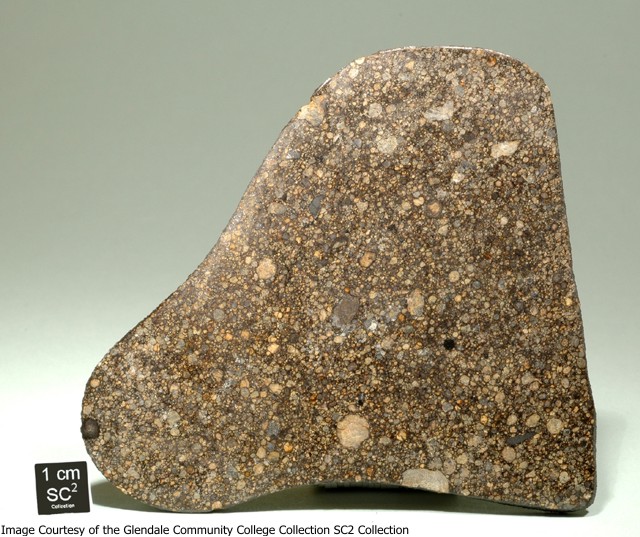
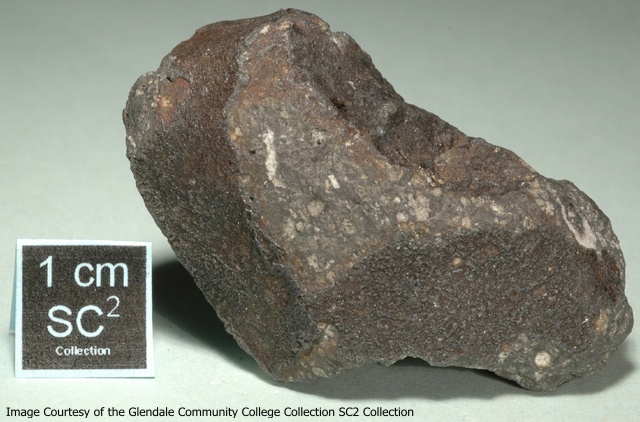
Achondrites - stony meteorites without chondrules
Formed closer than 3 AU
Formed as the result of planetary processes - melting and crystallization - in a very large asteroid large
12 types - Acapulcoits, Angrite, Aubrites, Brachinite, Diogenites, Eucrites, Howardites, Lodranite, Lunar, SNC, Ureilites, Winonaite

Stony-Iron Meteorites
Combination of stony and iron materials
Pallasites
Formed when core material mixed with silicate magma
Mesosiderites
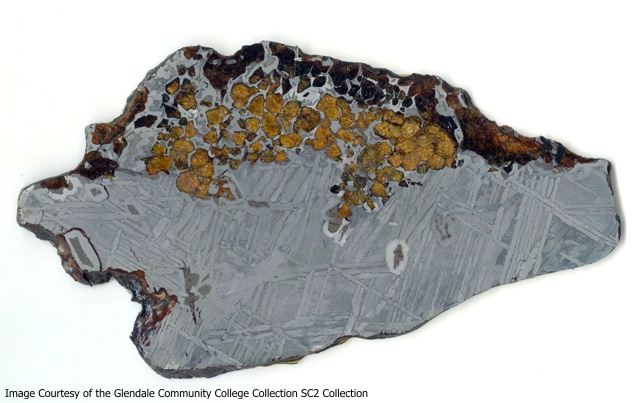
Iron Meteorites
Composed of iron and nickel
Formed as the core of a planetary body
Widmanstatten Pattern

Tektites
Silica-rich impact generated glass objects