Descriptive Astronomy 101
Earth - Volcanism
Volcanoes
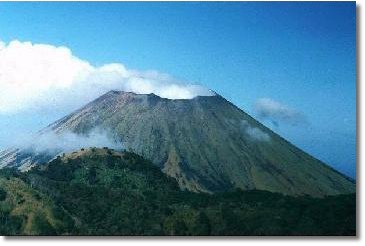
Conical or dome-shapes landforms
Magma rises from a magma chamber through a conduit (vent)
Location of Volcanism
Where are most active volcanoes found?
Spatter Cones
Small cones - (only a few meters tall)
Composed of basalt
Associated with and built on top of lava flows
• Example 1
• Example 2


Cinder Cones
Also called Scoria Cone
Cinders (scoria of basalt or andesite) are erupted from a central vent
Loose cinders form a cone-shaped pile around the vent
Eruption style - Strombolian - results from bursting bubbles of gas in the magma
• Example 1
• Example 2
• Example 3
• Example 4
• Example 5
• Example 6


Shield Volcanoes
Built from pahoehoe lava flows - basalt
Shallow slopes with relatively flat tops (look like a shield lying on the ground)
Spatter Cones often develop
Summit calderas are common
Largest volcanoes in the world and Solar System
• Example 1
• Example 2
• Example 3
• Example 4


Stratovolcanoes
Also called Composite Cones
Steep-sided, composed of lava flows and pyroclastic deposits
Composition - andesite, dacite or rhyolite
Violent eruption - due to gas content and high viscosity magma
Ash deposits can be extensive
• Example 1
• Example 2
• Example 3
• Example 4
• Example 5
• Example 6
• Example 7




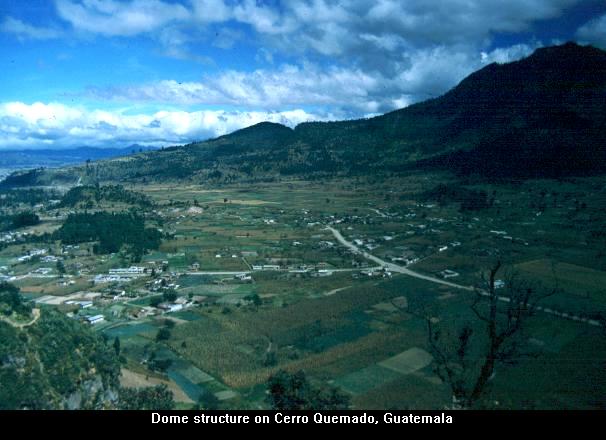
Domes
Lava flows of andesite, dacite, rhyolite or obsidian - viscous lava - low gas
Typically steep-sided with relatively flat tops
Endogenous domes - lava builds the dome from the inside
Exogenous domes - lava builds the dome by flows on the surface
• Example 1
• Example 2
• Example 3
• Example 4
• Example 5
• Example 6
• Example 7



Flood Basalts
Basalt lava flows which cover large areas - 100's of km2
Eruption from fissures (cracks or fractures)
Not completely understood as to why such huge volumes of lava is produced.
• Example 1
• Example 2
• Example 3


Calderas
Collapse structures
Form due to the eruption or draining of magma from the magma chamber.
May or may not be associated with a volcanic cone.
• Example 1
• Example 2


Hot Springs
Hot water resulting from recent or impending volcanic or magmatic activity.
Magma body cooling will heat surrounding groundwater.
Minerals dissolved in the hot water are deposited at the surface when
the water cools or evaporates.
• Example 1
• Example 2
• Example 3
• Example 4


Erosion of Volcanoes
Erosional remains of volcanic structures.
Cone structure is often removed by erosion
Central vent materials remain
Volcanic neck - vent of a volcano remains after the cone has been eroded away
Watch a short video to see the relationship between a volcanic neck and the cone.

Dikes - conduit for lava reaching the surface - often sheet-like structures
• Example 1
• Example 2
• Example 3
• Example 4


