Physical Geology 101
Mineral Systems and Physical Properties
Mineral Physical Properties
Physical aspects of a mineral.
Based on chemical composition and crystalline structure.
Physical Properties
Color
Cleavage
Streak
Fracture
Hardness
Luster
Crystal Form
Other
Color
Most obvious physical property.
Most deceptive physical property.
Most minerals can have more than one color.
Controlled by chemical composition - different chemicals result in different colors.
Streak
The color of a mineral that is powdered.
Streak color of a mineral shows less variation than the Color.
Most minerals have only one streak color.
All minerals have a streak color.
Controlled by the chemical composition.
Hardness
Ability of a mineral to resist abrasion.
Controlled by the crystalline structure and the type of chemical bonds.
stronger bonds = harder mineral
Mohs Scale of Hardness
Minerals are ranked on a scale of 1 to 10
1 is the softest; 10 is the hardest
1. Talc
2. Gypsum
3. Calcite
4. Fluorite
5. Apatite
6. Orthoclase
7. Quartz
8. Topaz
9. Corundum
10. Diamond
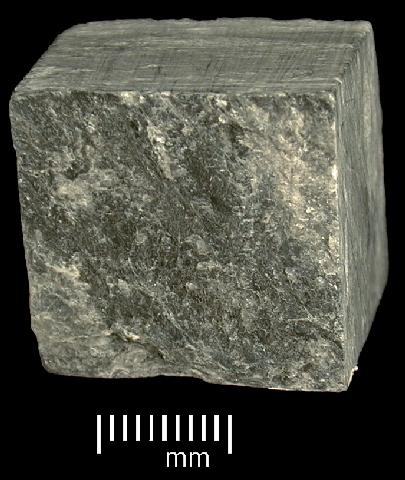


Crystal Form
Mineral shape, if the mineral is allowed to grow unrestricted.
Controlled by crystalline structure.
Not very useful for mineral identification.
many minerals have more than one crystal form.
well developed crystals are relatively rare.
Cleavage
Tendency of a mineral to break along a plane of weakness within crystalline structure.
Controlled by crystalline structure and chemical bonding.
0, 1, 2, 3, 4, and 6 cleavage planes can exist.
Most difficult physical property for students to understand and identify.
Fracture
Similar to cleavage
Manner in which mineral breaks, but not along a plane of weakness.
Conchoidal fracture - break looks like broken glass.
Irregular fracture
Controlled by crystal structures and chemical bonding.
All minerals have fracture.

Luster
Appearance and intensity of light reflected from mineral surface.
Two main groups.
Metallic - looks like metal.
Non-metallic - doesn't look like metal.
Controlled by chemical composition and crystal structure.
Generally, not very useful for identification.
Other Physical Properties
Specific Gravity - ratio of the mass of a given volume of mineral to the mass of an equal volume of water
Magnetism
Taste
Hydrochloric acid - HCl - Click here to see an short animation (MPG file - 351 Kb)
Radioactivity - Example showing the detection of radioactivity using a Geiger Counter in a sample containing the radioisotope thorium.
Fluorescence

Mineral Systems
Minerals can be grouped together based on similarities in chemical composition and crystalline structure
Polymorphs
Polymorphs are minerals which have a single chemical composition but more than one crystalline structure.
Graphite and Diamond same chemical composition - different crystalline structure.


Pseudomorphs
Pseudomorphs are minerals that take the form of another mineral.
Quartz has a hexagonal crystal.
Quartz will form a cubic crystal if it replaces halite.
Mineral Systems
Minerals can be grouped together based on similarities in chemical composition and crystalline structure.
Silicate Minerals
Nesosilicates
Single Chain Silicates
Double Chain Silicates
Sheet Silicates
Framework Silicates
Non-Silicate Minerals
Carbonates
Sulfates
Sulfides
Oxides
Hydroxides
Halides
Phosphates
Native Elements
Rock Forming Minerals
Augite - Dark or dull green color, 2 cleavages at ~90 degrees, similar properties to Hornblende

Biotite - Black color, one perfect direction of cleavage resulting in the mineral pealing into thin, flexible sheets, similar properties to Muscovite

Calcite - H=3, reacts with HCl, 3 directions of cleavage (rhombic cleavage)
Fluorite - H=4, 4 directions of cleavage, often purple in color (can be white, clear, yellow, green)
Garnet - Typically reddish brown color, no cleavage, commonly found in twelve-sided crystals (dodecahedrons)

Graphite - "Pencil lead", soft metallic mineral, gray streak
Gypsum - H=2, can be scratched with a fingernail
Halite - "Salt", H=2.5, cannot be scratched with a fingernail, 3 directions of cleavage (cubic), salty taste

Hematite - Reddish brown streak, "rust"

Hornblende - Black to dk. green color, 2 directions of cleavage at 120 or 60 degrees, similar properties to Augite

Magnetite - Magnetic, metallic mineral

Muscovite - Clear or translucent color, one perfect direction of cleavage resulting in the mineral pealing into thin, flexible sheets, similar properties to Biotite

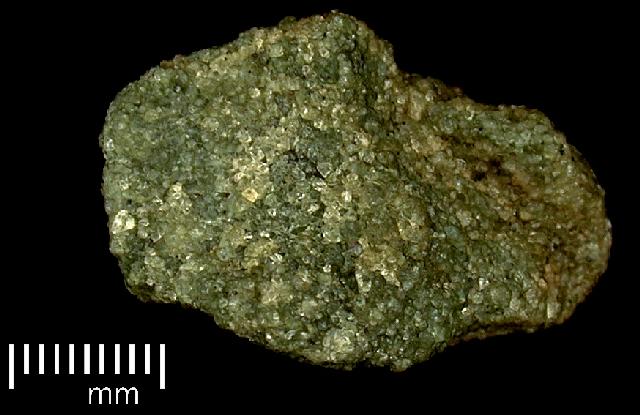
Olivine - Apple green or yellowish green color, H=7 (often difficult to determine), conchoidal fracture, no cleavage
Orthoclase - H=6, salmon pink color is typical, perthitic intergrowths are common, 2 directions of cleavage at 90 degrees, similar properties to plagioclase
Plagioclase - H=6, white or gray color, striations may be seen on cleavage surface, 2 directions of cleavage at 90 degrees, similar properties to orthoclase

Pyrite - "Fool's Gold", gold metallic color

Quartz - H=7, conchoidal fracture, no cleavage, color is typically white or clear but can be pink, red, purple, black
Mineral Identification
Additional information and identification exercises can be found at:
Mineral Physical Properties and Mineral Identification